
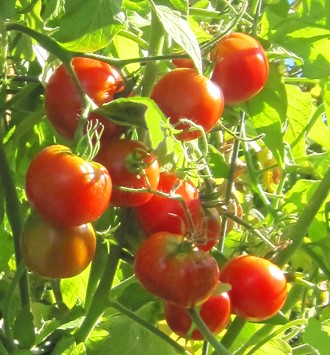
Stupice Tomato, extra-early
SKU:
$3.30
$3.30
per item
The easiest-to-grow, earliest, and most tolerant of harsh conditions of any tomato I've grown. This is the one I plant every year for my first-early tomatoes, and my hedge against any kind of weather. Saladette size (2" diameter), full-flavored tomatoes early and often--a heavy bearer until frost. The vines are not large--this plant puts all of its energy into tomatoes! Truly the most dependable tomato around. 55-60 days from transplant. 20 seeds
Stupice (Stew-peach) was introduced to the US in the 1980's by the Abundant Life seed foundation, as part of their effort to preserve open-pollinated European heirlooms when the European Union outlawed many of them.This Czech variety immediately replaced virtually all of the extra-early tomatoes then available--Stupice was both more dependable and much better-flavored than any other in its class.. It has become a classic, especially in the north, on coasts, and in mountain areas. Gardeners in the south and west have found that it is just as impervious to heat as it is to cold. I have seen it make excellent tomatoes on almost no water, though of course it makes more of them if it has better conditions.
Our varieties are chosen for flavor. In addition, each has its own special talent or trait that you may want--disease resistance, ripening time, heat resistance, cold resistance, low-light tolerance, etc. They are listed in order of ripening--within their category. (All slicers, early to late, then all cherries, early to late, then paste.) I recommend growing an early, a main crop, and a late tomato to have a dependable supply all summer. I have noted which tomatoes do well in especially cool or hot climates. Most of our varieties are indeterminate, meaning that they make a vine that needs support, but continues to bear until frost kills it. So-called bush, or determinate, types bear a more concentrated crop for canning or freezing. Most are commercial varieties that ship well but lack flavor.
Two tips to maximize flavor and minimize cracking: In areas where nights are cold, pick in the afternoon for best flavor. (Cold temps make tomatoes sour and tasteless, which is why we don't put them in the fridge.) Pick ripe and near-ripe fruit before you water, to avoid cracking and watery flavor. Fruit that has colored, but needs a couple of days for full ripeness will ripen with full flavor indoors. (This is nothing like the way agri-biz tomatoes are picked totally green and artificially ripened.)
Our varieties are chosen for flavor. In addition, each has its own special talent or trait that you may want--disease resistance, ripening time, heat resistance, cold resistance, low-light tolerance, etc. They are listed in order of ripening--within their category. (All slicers, early to late, then all cherries, early to late, then paste.) I recommend growing an early, a main crop, and a late tomato to have a dependable supply all summer. I have noted which tomatoes do well in especially cool or hot climates. Most of our varieties are indeterminate, meaning that they make a vine that needs support, but continues to bear until frost kills it. So-called bush, or determinate, types bear a more concentrated crop for canning or freezing. Most are commercial varieties that ship well but lack flavor.
Two tips to maximize flavor and minimize cracking: In areas where nights are cold, pick in the afternoon for best flavor. (Cold temps make tomatoes sour and tasteless, which is why we don't put them in the fridge.) Pick ripe and near-ripe fruit before you water, to avoid cracking and watery flavor. Fruit that has colored, but needs a couple of days for full ripeness will ripen with full flavor indoors. (This is nothing like the way agri-biz tomatoes are picked totally green and artificially ripened.)